
Phlebotomy
Choose Ohio First Scholarship
Get a great career with no debt. We're offering a full-tuition scholarship for students entering in-demand fields. Learn More
Mandatory Information Session Required for Registration for Phlebotomy Program
Information Session PowerPoint (.pptx)
Directions: Review the PowerPoint or the narrated video, if you have any questions about the program, email phlebotomy@cscc.edu. Once you've viewed the presentation, complete the Phlebotomy Information Session Quiz to record your attendance.
*Note to students: you do not need to complete the powerpoint and quiz AND the virtual information session, you can choose one or the other.
If you would prefer an alternative format, we are holding virtual information sessions as well via Teams. The dates and times are listed below:
Wednesday, June 10, 2026
1 p.m.
Tuesday, June 23, 2026
9 a.m.
Zoom Link
Monday, July 6, 2026
2 p.m.
Zoom Link
Tuesday, July 21, 2026
12 p.m.
Zoom Link
Thursday, August 6, 2026
1 p.m.
Zoom Link
There is no need to register for the Mandatory Information Session, however attendance is required to register for the first semester courses, MULT 1950 and MULT 1910.
To make sure you are ready for registration for the Phlebotomy Program, you MUST attend a Mandatory Information Session to learn how you can become eligible to be registered into the program based on course prerequisites (see "Prerequisites"), fingerprinting for a background check AND drug screening. If your fingerprint/background check investigation has any background problems, you will be contacted by the chairperson who will make the determination regarding the ability to be eligible to stay or continue with registering of the program. If you are not permitted to stay in the program, you will be asked to drop the course that day. In addition, completion of health records are mandatory. However, this can be done after you have successfully registered for MULT 1950 and MULT 1910. Details to this process, the background check, drug screening, and thealth records will be shared during the Mandatory Information Session.
Programs and Certificates
About the Phlebotomy Program
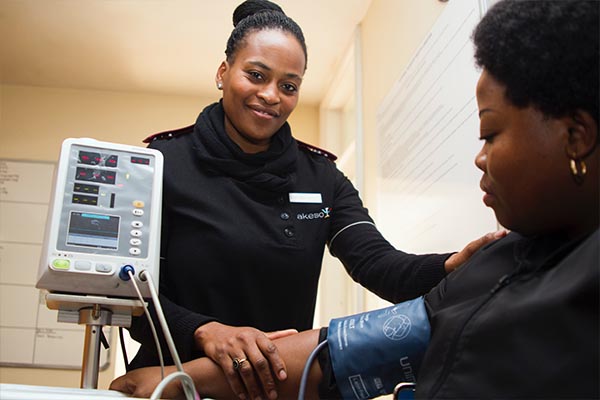
The Phlebotomy program is a 2-semester sequence in which theory and skills are practiced in the classroom and campus laboratory environment and also in the clinical setting. Upon completion of the 2-semester program, a certificate of completion is awarded by the college. To become nationally certified, you will need to take an examination, administered by an outside agency. Completion of this national certification exam is not a requirement to successfully complete the program.
During the first semester:
MULT 1950, students learn the theory associated with the collection of blood and practice the skill in the campus laboratory environment. In addition, the student participates in a clinical experience in an outpatient setting. In this experience, students are exposed to a variety of patient types and blood collection techniques. Also in the first semester students will take MULT 1910, where students will learn how to correctly perform the twelve lead EKG, troubleshoot the instrumentation for a source of error, explanation of results achieved from the process, an introduction to health care, anatomy and physiology of the heart, and basic dysrhythmia recognition.
In the second semester:
MULT 2950 continues the practice in an in-patient clinical setting. At this point, these clinical experiences are only available during the day shift.
The clinical facilities that are used for this clinical experience are located in Columbus and is surrounding counties. Assignment to the clinical experience facility in the first course is based upon order of registration. The completion of the program is a requirement for eligibility to take the national certification exams administered by ASCP and NCA. However, passing the national certification exam it is not a requirement for the awarding of the Phlebotomy Program Certificate of Completion.
Student Handbook