Strategic Plan
In celebration of its 60th anniversary, Columbus State is building on its past successes with an updated Strategic Plan. The current Strategic Plan will build on previous achievements and reflect the current and anticipated future-state opportunities to improve the college's impact and outcomes in service to our region.
Mission, Vision, Values, & Commitments
Our Strategic Plan is guided by our mission: "To educate and inspire, providing our students with the opportunity to achieve their goals."
View Our Mission, Vision, Values, & Commitments
In parallel with updating our Strategic Plan, we’ve created a Commitments statement that builds upon our mission, vision, and values to encapsulate our beliefs about how we honor the students, faculty and staff that make up our institution. You can find this statement incorporated into our Mission, Vision, Values, & Commitments page, and in the downloadable and flipbook Strategic Plan assets.
The Strategic Pillars
Columbus State's strategic vision centers around our four core pillars, which serve as the foundation for the college's Mission, Vision, and Values. By prioritizing Student Success, Workforce Development, Community Impact, and Our People and establishing strong partnerships with regional stakeholders, Columbus State will advance economic mobility for the many communities we serve.
Student Success
We are a student-centered college that advances outcomes for the communities we serve through an intentional focus on teaching, learning, and holistic support.
Grow to exceed 10,000 students who complete degrees, certificates, or other credentials annually while closing equity gaps.
- Expand the use of high-impact practices that accelerate completion and transfer pathways that propel students into economically mobile careers.
- Foster a culture of belonging for students of all backgrounds by offering convenient, relevant, and holistic approaches to instruction and student support.
- Extend debt-free pathways and other affordability initiatives that enable students to pursue and advance in their careers.
Adapt to expand opportunities for residents, employers, and other community members.
- Optimize the college’s enrollment strategies, locations, teaching modalities, and programs to meet the changing demographics and needs of the communities we serve.
- Ensure students can access affordable education-to-career pathways from all starting points, including K-12, career/technical education, career change, and other circumstances.
- Accelerate the college’s anticipation of and response to competitive changes to the region, such as new technologies, industries, or other factors.
Enhance excellence in teaching and student support through a sustained focus on evidence-based practices that drive student outcomes.
- Utilize data about the student experience to inform continued improvements to teaching practices, the learning climate, and the curriculum.
- Help students address challenges that may impact their health, well-being, and other dynamics by connecting them with resources.
- Provide professional development opportunities for faculty and the student-support team that advance best practices aligned with community needs.
Workforce Development
We are the region's workforce engine, powering economic mobility for all through comprehensive career pathways and innovative employer partnerships.
Partner with employers to cultivate a comprehensive talent ecosystem that powers inclusive economic mobility and central Ohio’s growth.
- Serve as the region's talent innovation hub, where employers and the college collaborate to address the future of work.
- Fuel economic mobility so that all individuals we serve have access to sustainable, high-wage careers.
- Enable career growth for adult learners who are upgrading their skills or transitioning industries, as well as those involved in entrepreneurship and small business expansion.
Accelerate secondary to post- secondary pathways for all central Ohio that lead to careers aligned with labor market needs.
- Leverage the Central Ohio Compact and K-12 partnerships to ensure that academic programs lead to economically viable career credentials.
- Scale innovative instructional and student support practices that prepare students for post-secondary learning and high-wage careers.
- Adapt to support the changing demographics of our community, including the growing number of new Americans.
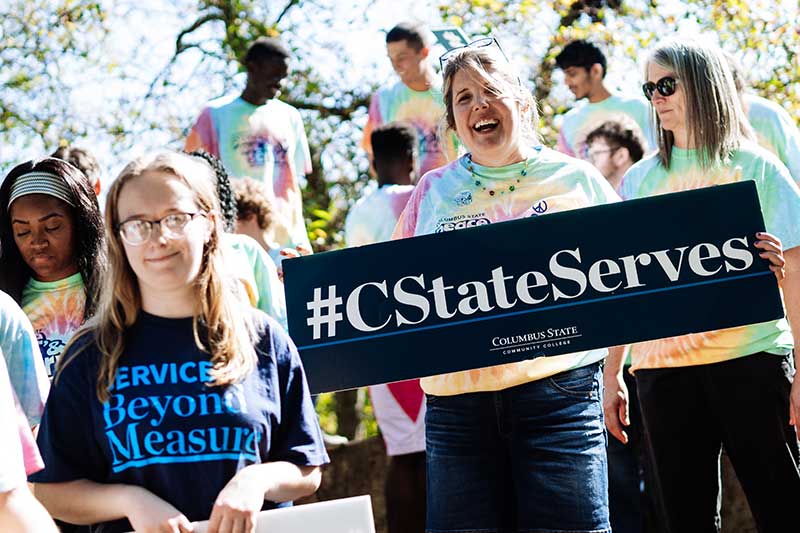
Community Impact
As the community’s trusted partner, we extend our impact beyond the college’s boundaries through connections that benefit our students and central Ohio.
Advance regional priorities through the college’s leadership role as a community partner, connector, and convener.
- Advance strategic alliances with local, state, non- profit, K-12, higher education, and other institutions to address community and workforce needs.
- Utilize our national leadership role to attract grants or other resources that support community needs.
- Use our internal resources and capital to advance regional priorities, including economic mobility.
Utilize partnerships to enhance holistic support for students and the Columbus State experience.
- Develop and grow high-impact partnerships that enhance students’ access to core services, such as transportation, housing, food, and child care.
- Partner on initiatives that improve the services, amenities, and the general environment in and around Columbus State.
- Enable Columbus State students and employees to demonstrate community leadership through service and other activities.
- Collaborate on service-learning and other activities that strengthen students’ and employees’ civic connections.
- Provide students and employees with opportunities to enhance leadership skills through partnerships with civic and community organizations.
Enable Columbus State students and
employees to demonstrate community
leadership through service and
other activities.
- Collaborate on service-learning and other activities
that strengthen students’ and employees’
civic connections. - Provide students and employees with opportunities
to enhance leadership skills through partnerships
with civic and community organizations.
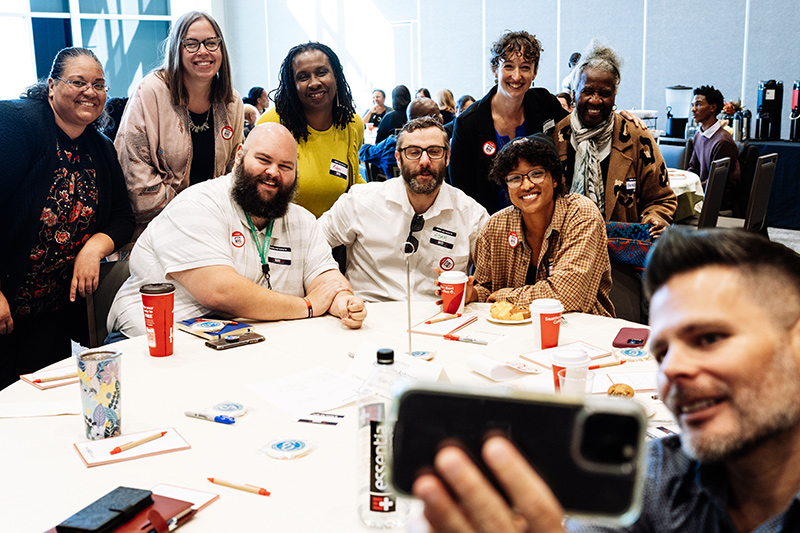
Our People
We are a community that works as a team to support our students, the broader community, and one another in a culture of mutual respect and professional growth.
Champion a collaborative and inclusive culture where we learn from one another’s perspectives and lived experiences to advance our mission.
- Recruit, hire, retain, and promote people committed to our diverse students and community, as reflected by Columbus State’s mission, vision, and values.
- Foster a culture of mutual respect and shared responsibility, in which each individual acts on opportunities to improve what we do.
Provide individual improvement opportunities that enhance career growth, belonging, and satisfaction.
- Provide ongoing opportunities for personal learning, growth, and impact to benefit Columbus State and the broader community.
- Invest in robust programs, systems, and structures that enable employees at all career stages to experience personal and professional growth.
- Enhance team-building opportunities that heighten the sense of belonging and shared mission.
Measuring Our Success
The success of this strategic plan is rooted in its integration into the college’s goal-setting and assessment processes, as well as our strong focus on grounding decision-making in evidence.
This plan will be measured through our college student success scorecard; our enrollment management metrics; the college’s employee performance management process; and regular student, employee, and community feedback.
Designed to be nimble and responsive, the plan ensures Columbus State is moving at the speed of the community. We are laser-focused on achieving our goals and doing our part to advance a prosperous central Ohio for all.
Commemorating Our 2014 Strategic Plan
The 2023 Strategic Plan follows on our planning process from 2014. Three priorities —Student Success, Workforce Development and Civic Engagement—dominated the conversation, and dedicated workgroups were charged with developing priorities and practical initiatives for each goal.
Student Success
- Steady upward progress in gateway college math and English course completion within year one.
- Improvement in degree, certificate, and successful transfer completion within a four-year timeframe.
- Pre-pandemic annual increases in degrees and certificates awarded.
- Improvement in course success rates correlated with out-of-classroom academic support services.
Workforce Development
- Began buildout of earn-and-learn opportunities within in-demand manufacturing and IT employment sectors, launched biotech and other bootcamp short-term workforce training programs, and partnered in state and local development efforts to attract Intel to central Ohio.
- Extended health care and IT career education opportunities into high school-accessible curriculum.
- Increased direct employer-student engagement opportunities.
Civic Engagement
- Enhanced supports for refugee and immigrant communities and former foster youth.
- More than 22,000 community volunteer hours through annual Day of Service observances.
- Formalized expanded non-academic student supports through the formation of an office of Student Affairs.